How Much Does It Cost to Open a Sober Living Home in 2026?
A breakdown of startup costs, ongoing expenses, and revenue models for operators planning to launch or expand sober living facilities.

What are the total startup costs for opening a sober living home?
The total startup costs range from $22,000-$68,000 for leased properties to $79,500-$258,000 or more for purchased properties, according to Sobriety Hub.
Twenty-two thousand dollars. That's a decent used car or six months of rent in most markets. It's also enough to open a sober living home if you lease instead of buy.
The math splits into two worlds. Lease a property and you're looking at $22,000-$68,000 to get doors open. Buy the building and that number jumps to $79,500-$258,000 or more. The difference isn't just down payment money. It's the gap between testing the waters and diving into the deep end.
Most first-time operators get the math wrong. They focus on the big-ticket items and forget about everything else that costs money before you collect your first rent check.
Say you lease a 6-bed house in a mid-tier market. Renovation and conversion work runs $3,000-$10,000. Furnishings and supplies add another $5,000-$15,000. Insurance hits you for $2,000-$8,000 annually, per Sobriety Hub. You haven't paid for licensing, legal setup, marketing, or the cash you'll need to survive your first few months at partial occupancy.
The renovation number deserves attention. Three thousand dollars gets you basic safety compliance and fresh paint. Ten thousand gets you the kind of space residents actually want to live in. Most operators land somewhere in the middle. They wish they'd spent more.
Here's what the spreadsheets don't capture: the cost of being wrong about your market. In Los Angeles County, shared rooms run $900-$3,000 or more per month, according to Puente House. In Florida, operators report $10,000-$14,000 gross monthly revenue for mid-market 8-bed homes. The startup cost is the same whether you're in a $900 market or a $3,000 market. The revenue isn't.
The purchase versus lease decision shapes everything that comes after. Lease and you're testing a business model with limited downside. Buy and you're betting the farm on your ability to fill beds and manage residents in a market you might not understand yet.
Most operators who succeed long-term eventually buy. But most operators who fail spectacularly started by buying.
How much should you budget for property renovation and setup?
Renovation costs range from $3,000 to $10,000, while furnishings and supplies add another $5,000 to $15,000, for a combined setup cost of $8,000 to $25,000.
I walked through a 4-bedroom ranch in Plano last month where the previous tenant had painted every wall neon green. The operator spent $8,500 just getting it back to neutral colors and replacing the carpet that smelled like a gas station bathroom. That's before a single piece of furniture went in.
The renovation piece runs $3,000 to $10,000 if you're leasing. This covers the basics: fresh paint, flooring that won't embarrass you, bathroom updates that meet basic safety standards. Think functional, not fancy. You're not flipping houses for HGTV. You're creating a space where people in early recovery can sleep without worrying about the ceiling falling in.
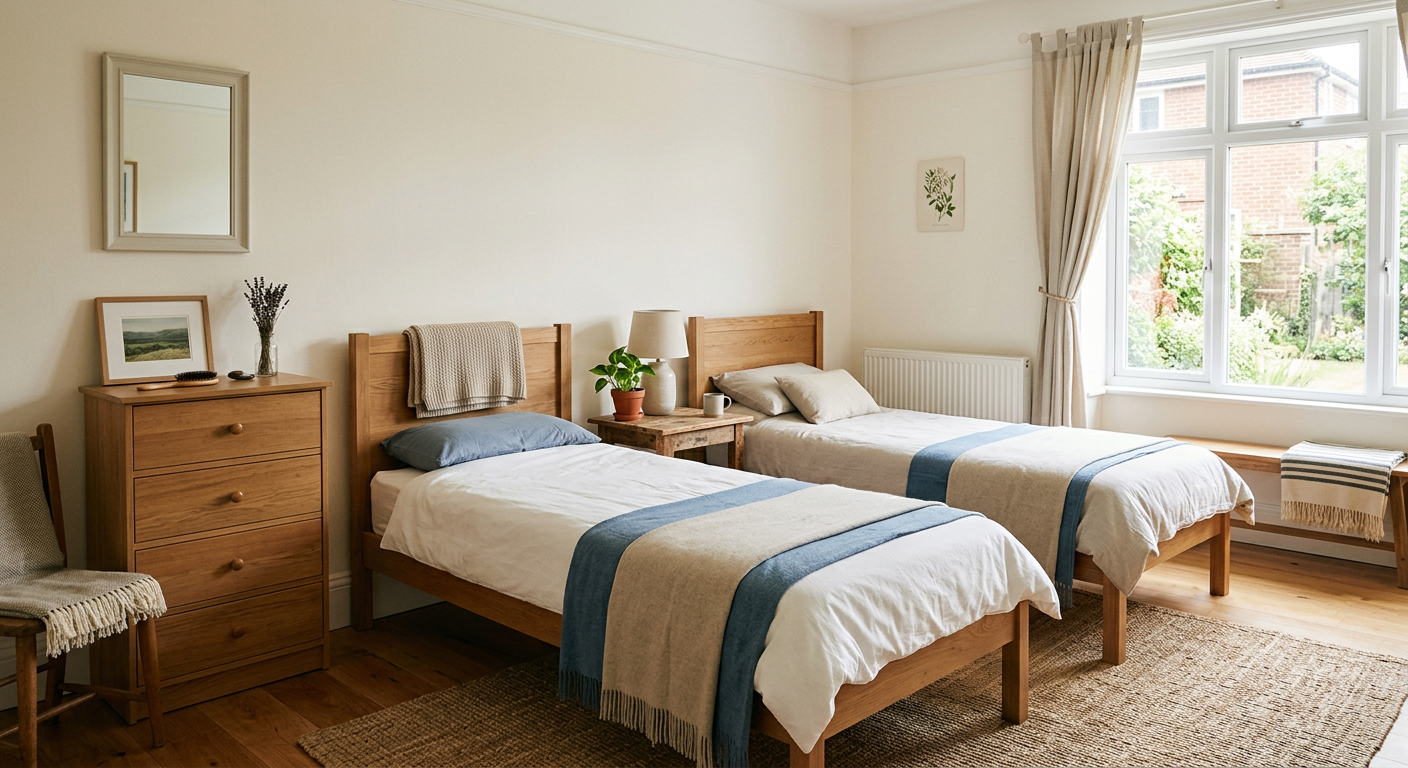
Furnishings and supplies add another $5,000 to $15,000. Beds for every room. A dining table that seats your capacity. Couches that can survive daily use by people who might not have lived in a stable environment for years. Kitchen basics. Cleaning supplies. The stuff that turns four walls into a home.
Operators get surprised here. Say you lease a 6-bed house in suburban Dallas. Renovation hits around $8,000. Furnishings run roughly $12,000. You're at $20,000 before your first resident walks through the door. That's real money. Not theoretical startup costs from a business plan.
The math changes completely if you buy instead of lease. Total startup costs jump to $79,500 to $258,000 or more because now you're carrying a mortgage, property taxes, and major repairs that landlords used to handle. You also control every decision about the property.
Most first-time operators lease for good reason. The renovation budget stays manageable, and you learn the business without betting the farm on real estate. You can always buy later once you understand what actually breaks in a sober living home.
What are the annual operating expenses for a sober living home?
Annual operating expenses typically run $30,000-$60,000 for a mid-sized home, with insurance alone costing $2,000-$8,000 yearly.
The water heater died on a Thursday in February. The plumber's bill hit $1,200, and that was just the beginning of what became a $4,000 month for repairs I hadn't budgeted for.
Insurance eats the biggest chunk of your annual budget. Sobriety Hub puts the range at $2,000-$8,000 per year for general liability, property coverage, and the specialized policies most carriers require for recovery housing. The higher end isn't luxury. It's what you pay in California or Florida where claims run hot and underwriters get nervous.
Utilities scale with occupancy but never linearly. A 6-bed house with four residents still needs heat, lights, and hot water for six. Budget for full capacity even when you're running lean. Internet, cable, and phone service add another layer. Residents expect connectivity, and house managers need reliable communication for crisis calls.
Maintenance is where operators bleed money. Not the big repairs you can see coming. The small stuff that compounds. Locks that stick. Faucets that drip. Carpet that wears thin in high-traffic areas. Set aside money monthly because something will break, usually at the worst possible time.
Staffing varies by model. Some operators run lean with part-time house managers. Others employ full-time staff for intake, case management, and overnight coverage. The math changes completely if you're paying benefits and payroll taxes.
State licensing and regulatory fees depend on your location. Some states treat recovery housing like rental property. Others require specialized permits, annual inspections, and compliance reporting that costs real money to maintain.
The hidden killer? Vacancy reserves. When a resident leaves owing two weeks' rent, you're not just losing future income. You're covering their share of fixed costs while scrambling to fill the bed.
What revenue can operators expect from resident fees and government programs?
Revenue streams split between private-pay residents at $450-$800 monthly and government programs paying $1,050-$1,650 per month per resident.
I walked through a 6-bed house in suburban Dallas where the operator was pulling $4,800 monthly from private-pay residents and another $3,300 from two county-funded beds. Mixed revenue streams. That's the model that works.
Private-pay rates vary dramatically by market. The Recovery Village reports shared rooms run $450-$800 nationally, but step into Los Angeles and you're looking at $800-$3,000 or more according to MARR Inc. Austin sits around $800 for shared accommodations. Florida operators report $175-$275 weekly per resident (approximately $700-$1,100 monthly). The math changes fast when you cross state lines.
Government contracts offer stability but come with strings attached. County and state programs pay $35-$55 daily per resident - that's $1,050-$1,650 monthly guaranteed. Higher than most private-pay rates. But you're dealing with referral systems, compliance audits, and payment delays that can stretch 60-90 days.
The revenue reality for an 8-bed suburban operation: Monthly rent ranges from $800-$1,200 per bed, generating $6,400-$12,000 in gross revenue. Florida operators with similar setups report $10,000-$14,000 monthly. The difference? Mix of private-pay and government contracts, plus local market rates.
Occupancy assumptions matter more than rate projections. Budget for 75% occupancy, not 100%. That 8-bed house generating $12,000 at full capacity? At 75% occupancy, you're looking at $9,000. Still profitable if your operating costs stay under $4,000 monthly, but the margin shrinks fast when beds sit empty.
The luxury market operates in a different universe entirely. High-end homes command $2,000 weekly or more, according to The Recovery Village - that's $8,000+ monthly per resident. But you're competing with treatment centers and executive programs, not standard recovery housing.
How long does it take to break even on a sober living home investment?
Most operators break even within 6-18 months if they lease and maintain steady occupancy, but purchased properties can take 2-4 years to recover the initial investment.
The math depends on one brutal reality: empty beds kill cash flow faster than anything else in this business.
Start with a leased property. Your upfront investment runs $22,000-$68,000. Say you lease an 8-bed in suburban Tampa for $2,200 monthly. Renovation costs $15,000. Furnishings run around $10,000. Insurance hits $5,000 annually. You're $35,000 deep before anyone moves in.
Now the revenue side. Mid-market 8-bed homes generate $10,000-$14,000 gross monthly at full occupancy. Net cash flow runs $5,000-$7,000 monthly after operating expenses. At that rate, you recover your initial $35,000 in 5-7 months.
Full occupancy is fantasy math.
Real operators budget for 75-85% occupancy in year one. That drops your monthly net to $4,000-$6,000. Suddenly you're looking at 6-9 months to break even. Add the inevitable surprises - a resident who skips owing two months, a plumbing emergency, higher-than-expected marketing costs - and 12-18 months becomes realistic.
Purchase scenarios change everything. Your startup costs jump to $79,500-$258,000. Even with the same monthly cash flow, you're looking at 12-40 months just to recover initial investment. That's before you factor in mortgage payments, property taxes, and major repairs that landlords usually handle.
The operators who break even fastest? They lease in markets where they can charge $800-$1,200 monthly while keeping total housing costs under 40% of gross revenue. They fill beds methodically rather than rushing to open at full capacity.
The difference between 12 months and 24 months to profitability usually comes down to one thing: how long it takes to consistently fill 7 out of 8 beds.
Sources
Note: This article is for informational purposes only and does not constitute legal advice. Consult a qualified attorney for guidance specific to your situation.

James covers the business of running sober living homes, from startup costs to the daily grind of keeping beds filled and bills paid. He's spent nearly a decade in recovery housing operations across Texas and California. He writes about what actually works, not what looks good in a business plan. Based in San Diego.
View all articles →Profit Leak Calculator
Find out how much your sober living home is losing to vacancies, admin time, and consumables. Free survival kit included.
Calculate your profit leak →